Buy pgx.eu ?
We are moving the project
pgx.eu .
Are you interested in purchasing the domain
pgx.eu ?
domain@kv-gmbh.de · 0541-91531010
Buy pgx.eu ?
What does media literacy mean?
Media literacy refers to the ability to access, analyze, evaluate, and create media in a variety of forms. It involves understanding how media messages are constructed, and being able to critically assess the information and ideas presented. Media literacy also includes the skills to effectively communicate through media, and to use media in a responsible and ethical manner. Overall, media literacy empowers individuals to be informed and active participants in our media-saturated society. **
Does the truth really need media literacy?
Yes, the truth does need media literacy. Media literacy helps individuals critically analyze and evaluate the information they consume, enabling them to discern between factual information and misinformation. In today's digital age, where information is easily accessible and can be easily manipulated, media literacy is essential for ensuring that the truth is not distorted or misrepresented. By being media literate, individuals can better navigate the vast amount of information available to them and make informed decisions based on accurate and reliable sources. **


Similar search terms for Literacy
Top-Angebote
Products related to Literacy:
-
Learning Resources Alphabet Coffee Cups - 52-Piece Set for Toddlers - Early Literacy Toy - Learning ResourcesDevelop early literacy skills with the Learning Resources Alphabet Coffee Cups. This 52-piece set includes 26 toy coffee cups and 26 matching snap-on lids, each featuring an uppercase letter on the cup and the corresponding lowercase letter on the lid. Children can match the letters together, practice recognising the alphabet, and explore beginning sounds as they play. The cups can be used for imaginative role play, such as running a pretend café or play kitchen, and can also be sorted by colour, arranged in alphabetical order, or used for group activities in early-years classrooms and nurseries. The cups and lids are made of durable plastic and can be stored in the reusable plastic bucket when not in use.21,55 £*Shipping: 3,95 £Secure redirect to the provider
-
Cornerstone Press Make Me Well: The Truth About the Wellness Industry, Supplements, and Personalised Health by Xand van TullekenIn a world of endless wellness advice, learn how to make smarter decisions about your health with the empowering new book from doctor and broadcaster Xand Van Tulleken. Drawing on original reporting, expert insight and real-world case studies, he explores: The truth about supplements and vitamins ― what works and what doesn’t The rise of at-home blood testing and personalised health plans How wearable technology (fitness trackers, sleep trackers, smartwatches) shapes our behaviour The promises and pitfalls of consumer genomics and DNA testing Why the line between healthcare and the wellness industry has become blurred There has never been a more confusing time to try to be healthy. From supplements and blood testing to wearable technology and consumer genomics, the modern wellness industry promises better energy, performance and longevity. But how much of it is science, and how much is marketing? In his groundbreaking book, Make Me Well, Xand van Tulleken investigates the new Wild West of the wellness industry, offering a clear, evidence-based guide to navigating today’s most popular health trends. With practical advice and accessible science, Make Me Well will help you cut through misinformation, avoid unnecessary costs, and make informed decisions about your physical and mental wellbeing. If you’ve ever wondered which health trends are worth your time and money, this is your essential guide to modern wellness.12,99 £*Shipping: 2,99 £Secure redirect to the provider
-
Templar Books The Colour Monster: A Colour Activity Book by Anna Llenas - Paperback - Ages 3-7 - Emotional Literacy Colouring & Activity BookThe Colour Monster: A Colour Activity Book by Anna Llenas is a bright, hands-on companion to the internationally loved Colour Monster picture book. Designed for children aged 3-7, this 48-page paperback invites young readers to explore emotions through colouring, tracing and imaginative prompts. Following Colour Monster's mixed-up feelings, kids match colours to moods, building emotional vocabulary while having fun. This activity book is perfect for home, nursery or classroom use, making it a great tool for quiet activity time and self-expression. Colour has always been at the heart of the Colour Monster story, and this activity book brings that idea vividly to life for little hands. Across 48 colourful pages, children are asked how Colour Monster is feeling in each scene, then invited to choose the appropriate colour to match their mood. Published by Templar Books, this book is a great way to encourage children to express themselves and explore their emotions through colouring and creativity.11,99 £*Shipping: 2,99 £Secure redirect to the provider
-
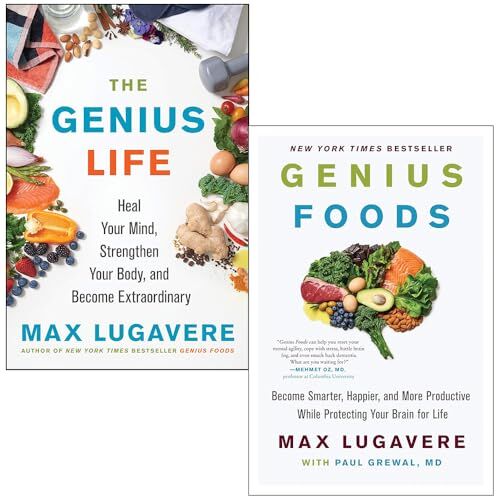
Harper ltd Max Lugavere 2 Book Set – Genius Foods & The Genius Life Brain Health, Nutrition & Wellness CollectionMax Lugavere 2-Book Collection Set (The Genius Life & Genius Foods – Nutrition, Health, Wellness, Diet, Brain & Body Health, Self-Help & Fitness) The Genius Life: Heal Your Mind, Strengthen Your Body, and Become Extraordinary: Supporting the work of Battersea Dogs and Cats Home.Enjoy a heartwarming dog to brighten every single day of the year. From Pickles, the dog who single-handedly saved the 1966 world cup, to Pal, who found silver screen fame as the original Lassie, Battersea's A Dog a Day contains 365 fascinating stories of dogs to enjoy throughout the year.Beautifully packaged and illustrated throughout with charming illustrations of cheeky puppies and hounds, this is the perfect book for any lover of our four-legged friends. Genius Foods: Become Smarter, Happier, and More Productive While Protecting Your Brain for Life: After his mother was diagnosed with a mysterious form of dementia, Max Lugavere put his successful media career on hold to learn everything he could about brain health and performance. For the better half of a decade, he consumed the most up-to-date scientific research, talked to dozens of leading scientists and clinicians around the world, and visited the country’s best neurology departments—all in the hopes of understanding his mother’s condition.Now, in Genius Foods, Lugavere presents a comprehensive guide to brain optimization. He uncovers the stunning link between our dietary and lifestyle choices and our brain functions, revealing how the foods you eat directly affect your ability to focus, learn, remember, create, analyze new ideas, and maintain a balanced mood.12,95 £*Shipping: 2,99 £Secure redirect to the provider


-
What are the differences between mathematical literacy and mathematics?
Mathematical literacy refers to the ability to understand and use mathematics in everyday life, such as interpreting data, making decisions based on numerical information, and solving practical problems. It focuses on the application of mathematical concepts in real-world situations. On the other hand, mathematics is the academic discipline that involves the study of numbers, quantities, shapes, and patterns, and the relationships between them. It is a more formal and abstract study of mathematical concepts, often involving rigorous proofs and theoretical frameworks. While mathematical literacy emphasizes practical application, mathematics focuses on theoretical understanding and development of mathematical principles. **
-
What are the differences between basic mathematical literacy and mathematics?
Basic mathematical literacy refers to the ability to understand and use fundamental mathematical concepts and skills, such as arithmetic, basic algebra, and geometry, to solve everyday problems. It involves being able to interpret and use numbers, measurements, and basic mathematical operations in practical situations. On the other hand, mathematics encompasses a much broader and deeper understanding of mathematical concepts, theories, and principles. It involves the study of advanced topics such as calculus, statistics, and abstract algebra, and the ability to apply mathematical reasoning and problem-solving skills to complex and theoretical problems. In essence, mathematical literacy is a foundational understanding of basic mathematical concepts, while mathematics involves a more advanced and comprehensive study of the subject. **
-
Should media literacy not become a mandatory subject in schools?
Media literacy should become a mandatory subject in schools because it is essential for students to develop critical thinking skills and the ability to analyze and evaluate media messages. In today's digital age, students are constantly bombarded with information from various sources, and it is crucial for them to be able to discern between credible and unreliable sources. Media literacy also helps students understand the impact of media on society and their own lives, empowering them to make informed decisions. By integrating media literacy into the curriculum, schools can better prepare students to navigate the complex media landscape and become responsible, discerning consumers of information. **
-
Does anyone know good arguments for why media literacy is so important?
Media literacy is crucial in today's digital age because it helps individuals critically analyze and evaluate the information they consume. By understanding how media messages are constructed and the potential biases they may contain, people can make more informed decisions and avoid being manipulated by false or misleading content. Media literacy also empowers individuals to be active and responsible participants in society, enabling them to engage in meaningful discussions, challenge misinformation, and contribute to a more informed and democratic society. **


When can one expect measures to promote media literacy in children and adolescents?
Measures to promote media literacy in children and adolescents can be expected to be implemented in educational settings, such as schools and after-school programs. Additionally, parents and caregivers can also play a crucial role in promoting media literacy by engaging in conversations with their children about media content and teaching them critical thinking skills. Furthermore, government and non-profit organizations may also implement initiatives to promote media literacy through public awareness campaigns and policy advocacy. Overall, promoting media literacy in children and adolescents is an ongoing effort that involves collaboration between various stakeholders. **
What responsibility do parents and legal guardians have in promoting media literacy in children?
Parents and legal guardians have a significant responsibility in promoting media literacy in children. They should actively engage with their children about the media they consume, teaching them to critically analyze and question the messages and content they encounter. It is important for parents to set guidelines and boundaries for media use, and to model healthy media consumption habits themselves. By fostering open communication and providing guidance, parents and legal guardians can help children develop the skills to navigate and understand the media landscape. **
Top-Angebote
Products related to Literacy:
-
Apple Complete Guide to Natural Vitamins by Lizzie Streit - Paperback Nutrition Guide - Food & Supplements - Adult Non FictionA practical guide to natural vitamins, written by a registered dietitian, this paperback book helps readers understand which vitamins and minerals the body needs and how to get them through everyday food. It blends nutrition science with realistic strategies, making it an approachable reference for anyone wanting to boost their diet, support their immune system, and build healthy habits at home. The book covers every essential vitamin and mineral, explaining what each nutrient does, how deficiencies develop, and which medical conditions or life stages can increase the risk of falling short. It prioritizes natural food sources, listing where to find each nutrient, rather than focusing solely on supplements.9,99 £*Shipping: 2,99 £Secure redirect to the provider
-
Learning Resources Alphabet Coffee Cups - 52-Piece Set for Toddlers - Early Literacy Toy - Learning ResourcesDevelop early literacy skills with the Learning Resources Alphabet Coffee Cups. This 52-piece set includes 26 toy coffee cups and 26 matching snap-on lids, each featuring an uppercase letter on the cup and the corresponding lowercase letter on the lid. Children can match the letters together, practice recognising the alphabet, and explore beginning sounds as they play. The cups can be used for imaginative role play, such as running a pretend café or play kitchen, and can also be sorted by colour, arranged in alphabetical order, or used for group activities in early-years classrooms and nurseries. The cups and lids are made of durable plastic and can be stored in the reusable plastic bucket when not in use.21,55 £*Shipping: 3,95 £Secure redirect to the provider
-
Cornerstone Press Make Me Well: The Truth About the Wellness Industry, Supplements, and Personalised Health by Xand van TullekenIn a world of endless wellness advice, learn how to make smarter decisions about your health with the empowering new book from doctor and broadcaster Xand Van Tulleken. Drawing on original reporting, expert insight and real-world case studies, he explores: The truth about supplements and vitamins ― what works and what doesn’t The rise of at-home blood testing and personalised health plans How wearable technology (fitness trackers, sleep trackers, smartwatches) shapes our behaviour The promises and pitfalls of consumer genomics and DNA testing Why the line between healthcare and the wellness industry has become blurred There has never been a more confusing time to try to be healthy. From supplements and blood testing to wearable technology and consumer genomics, the modern wellness industry promises better energy, performance and longevity. But how much of it is science, and how much is marketing? In his groundbreaking book, Make Me Well, Xand van Tulleken investigates the new Wild West of the wellness industry, offering a clear, evidence-based guide to navigating today’s most popular health trends. With practical advice and accessible science, Make Me Well will help you cut through misinformation, avoid unnecessary costs, and make informed decisions about your physical and mental wellbeing. If you’ve ever wondered which health trends are worth your time and money, this is your essential guide to modern wellness.12,99 £*Shipping: 2,99 £Secure redirect to the provider
-
What does media literacy mean?
Media literacy refers to the ability to access, analyze, evaluate, and create media in a variety of forms. It involves understanding how media messages are constructed, and being able to critically assess the information and ideas presented. Media literacy also includes the skills to effectively communicate through media, and to use media in a responsible and ethical manner. Overall, media literacy empowers individuals to be informed and active participants in our media-saturated society. **
-
Does the truth really need media literacy?
Yes, the truth does need media literacy. Media literacy helps individuals critically analyze and evaluate the information they consume, enabling them to discern between factual information and misinformation. In today's digital age, where information is easily accessible and can be easily manipulated, media literacy is essential for ensuring that the truth is not distorted or misrepresented. By being media literate, individuals can better navigate the vast amount of information available to them and make informed decisions based on accurate and reliable sources. **
-
What are the differences between mathematical literacy and mathematics?
Mathematical literacy refers to the ability to understand and use mathematics in everyday life, such as interpreting data, making decisions based on numerical information, and solving practical problems. It focuses on the application of mathematical concepts in real-world situations. On the other hand, mathematics is the academic discipline that involves the study of numbers, quantities, shapes, and patterns, and the relationships between them. It is a more formal and abstract study of mathematical concepts, often involving rigorous proofs and theoretical frameworks. While mathematical literacy emphasizes practical application, mathematics focuses on theoretical understanding and development of mathematical principles. **
-
What are the differences between basic mathematical literacy and mathematics?
Basic mathematical literacy refers to the ability to understand and use fundamental mathematical concepts and skills, such as arithmetic, basic algebra, and geometry, to solve everyday problems. It involves being able to interpret and use numbers, measurements, and basic mathematical operations in practical situations. On the other hand, mathematics encompasses a much broader and deeper understanding of mathematical concepts, theories, and principles. It involves the study of advanced topics such as calculus, statistics, and abstract algebra, and the ability to apply mathematical reasoning and problem-solving skills to complex and theoretical problems. In essence, mathematical literacy is a foundational understanding of basic mathematical concepts, while mathematics involves a more advanced and comprehensive study of the subject. **
Similar search terms for Literacy
-
Templar Books The Colour Monster: A Colour Activity Book by Anna Llenas - Paperback - Ages 3-7 - Emotional Literacy Colouring & Activity BookThe Colour Monster: A Colour Activity Book by Anna Llenas is a bright, hands-on companion to the internationally loved Colour Monster picture book. Designed for children aged 3-7, this 48-page paperback invites young readers to explore emotions through colouring, tracing and imaginative prompts. Following Colour Monster's mixed-up feelings, kids match colours to moods, building emotional vocabulary while having fun. This activity book is perfect for home, nursery or classroom use, making it a great tool for quiet activity time and self-expression. Colour has always been at the heart of the Colour Monster story, and this activity book brings that idea vividly to life for little hands. Across 48 colourful pages, children are asked how Colour Monster is feeling in each scene, then invited to choose the appropriate colour to match their mood. Published by Templar Books, this book is a great way to encourage children to express themselves and explore their emotions through colouring and creativity.11,99 £*Shipping: 2,99 £Secure redirect to the provider
-
Harper ltd Max Lugavere 2 Book Set – Genius Foods & The Genius Life Brain Health, Nutrition & Wellness CollectionMax Lugavere 2-Book Collection Set (The Genius Life & Genius Foods – Nutrition, Health, Wellness, Diet, Brain & Body Health, Self-Help & Fitness) The Genius Life: Heal Your Mind, Strengthen Your Body, and Become Extraordinary: Supporting the work of Battersea Dogs and Cats Home.Enjoy a heartwarming dog to brighten every single day of the year. From Pickles, the dog who single-handedly saved the 1966 world cup, to Pal, who found silver screen fame as the original Lassie, Battersea's A Dog a Day contains 365 fascinating stories of dogs to enjoy throughout the year.Beautifully packaged and illustrated throughout with charming illustrations of cheeky puppies and hounds, this is the perfect book for any lover of our four-legged friends. Genius Foods: Become Smarter, Happier, and More Productive While Protecting Your Brain for Life: After his mother was diagnosed with a mysterious form of dementia, Max Lugavere put his successful media career on hold to learn everything he could about brain health and performance. For the better half of a decade, he consumed the most up-to-date scientific research, talked to dozens of leading scientists and clinicians around the world, and visited the country’s best neurology departments—all in the hopes of understanding his mother’s condition.Now, in Genius Foods, Lugavere presents a comprehensive guide to brain optimization. He uncovers the stunning link between our dietary and lifestyle choices and our brain functions, revealing how the foods you eat directly affect your ability to focus, learn, remember, create, analyze new ideas, and maintain a balanced mood.12,95 £*Shipping: 2,99 £Secure redirect to the provider
-
Nale Metabolic Pgx 90Cap.Nutrition and Supplements Special supplements Nale Metabolic Pgx 90Cap. Presentation: Bottle with 90 capsules. Composition: Amorphophallus Konjac K, 325 mg;Xanthan Gum, 325 mg;Sodium Alginate 40 mg;Carboxymethylcellulose 40 mg;Psyllium 40 mg.Vegetable capsule (Hypromellosa). Applications: Glucose and anxiety regulator.Diseases of the colon.Weight control;as an adjuvant.Diseases of digestive origin.Metabolic syndrome. Usage: Take three capsules on an empty stomach;or, two capsules half an hour before the meal and two half an hour before dinner with one or two glasses of water;or according to professional indication.19,19 £*Shipping: 3,99 £Secure redirect to the provider
-
Penguin Life Eat Yourself Healthy by Dr Megan Rossi - Gut Health & Nutrition Guide - Paperback - IBS, Bloating & Digestive Wellness RecipesDiscover the simple guide to a healthier you with Eat Yourself Healthy by Dr Megan Rossi. This accessible book explains how the trillions of microbes in your digestive system influence your energy levels, skin, mood, and immunity. Whether you're battling bloating, IBS, or just want to feel better from the inside out, Dr Rossi's practical advice and delicious gut-boosting recipes will help you take control of your gut health. Drawing on her decade of clinical experience and the latest scientific research, Dr Rossi demystifies the gut microbiome and shows you how to nurture it for long-term wellbeing. This book covers common digestive complaints such as IBS, bloating, and food intolerance, providing you with the knowledge and tools to make informed choices about your diet and lifestyle. Written by Dr Megan Rossi, a leading expert in gut health, Eat Yourself Healthy is a must-read for anyone looking to improve their overall health and wellbeing.14,99 £*Shipping: 2,99 £Secure redirect to the provider
-
Should media literacy not become a mandatory subject in schools?
Media literacy should become a mandatory subject in schools because it is essential for students to develop critical thinking skills and the ability to analyze and evaluate media messages. In today's digital age, students are constantly bombarded with information from various sources, and it is crucial for them to be able to discern between credible and unreliable sources. Media literacy also helps students understand the impact of media on society and their own lives, empowering them to make informed decisions. By integrating media literacy into the curriculum, schools can better prepare students to navigate the complex media landscape and become responsible, discerning consumers of information. **
-
Does anyone know good arguments for why media literacy is so important?
Media literacy is crucial in today's digital age because it helps individuals critically analyze and evaluate the information they consume. By understanding how media messages are constructed and the potential biases they may contain, people can make more informed decisions and avoid being manipulated by false or misleading content. Media literacy also empowers individuals to be active and responsible participants in society, enabling them to engage in meaningful discussions, challenge misinformation, and contribute to a more informed and democratic society. **
-
When can one expect measures to promote media literacy in children and adolescents?
Measures to promote media literacy in children and adolescents can be expected to be implemented in educational settings, such as schools and after-school programs. Additionally, parents and caregivers can also play a crucial role in promoting media literacy by engaging in conversations with their children about media content and teaching them critical thinking skills. Furthermore, government and non-profit organizations may also implement initiatives to promote media literacy through public awareness campaigns and policy advocacy. Overall, promoting media literacy in children and adolescents is an ongoing effort that involves collaboration between various stakeholders. **
-
What responsibility do parents and legal guardians have in promoting media literacy in children?
Parents and legal guardians have a significant responsibility in promoting media literacy in children. They should actively engage with their children about the media they consume, teaching them to critically analyze and question the messages and content they encounter. It is important for parents to set guidelines and boundaries for media use, and to model healthy media consumption habits themselves. By fostering open communication and providing guidance, parents and legal guardians can help children develop the skills to navigate and understand the media landscape. **
* All prices are inclusive of VAT and, if applicable, plus shipping costs. The offer information is based on the details provided by the respective shop and is updated through automated processes. Real-time updates do not occur, so deviations can occur in individual cases. ** Note: Parts of this content were created by AI.